
One machine, many missions.
An aerostat, a station that launches and recovers it, and software that runs many as one network. A new mission is a new payload.
In the air
Lifted by gas, held by a tether.
An envelope, a sail that keeps it pointed into the wind, a payload and a tether.
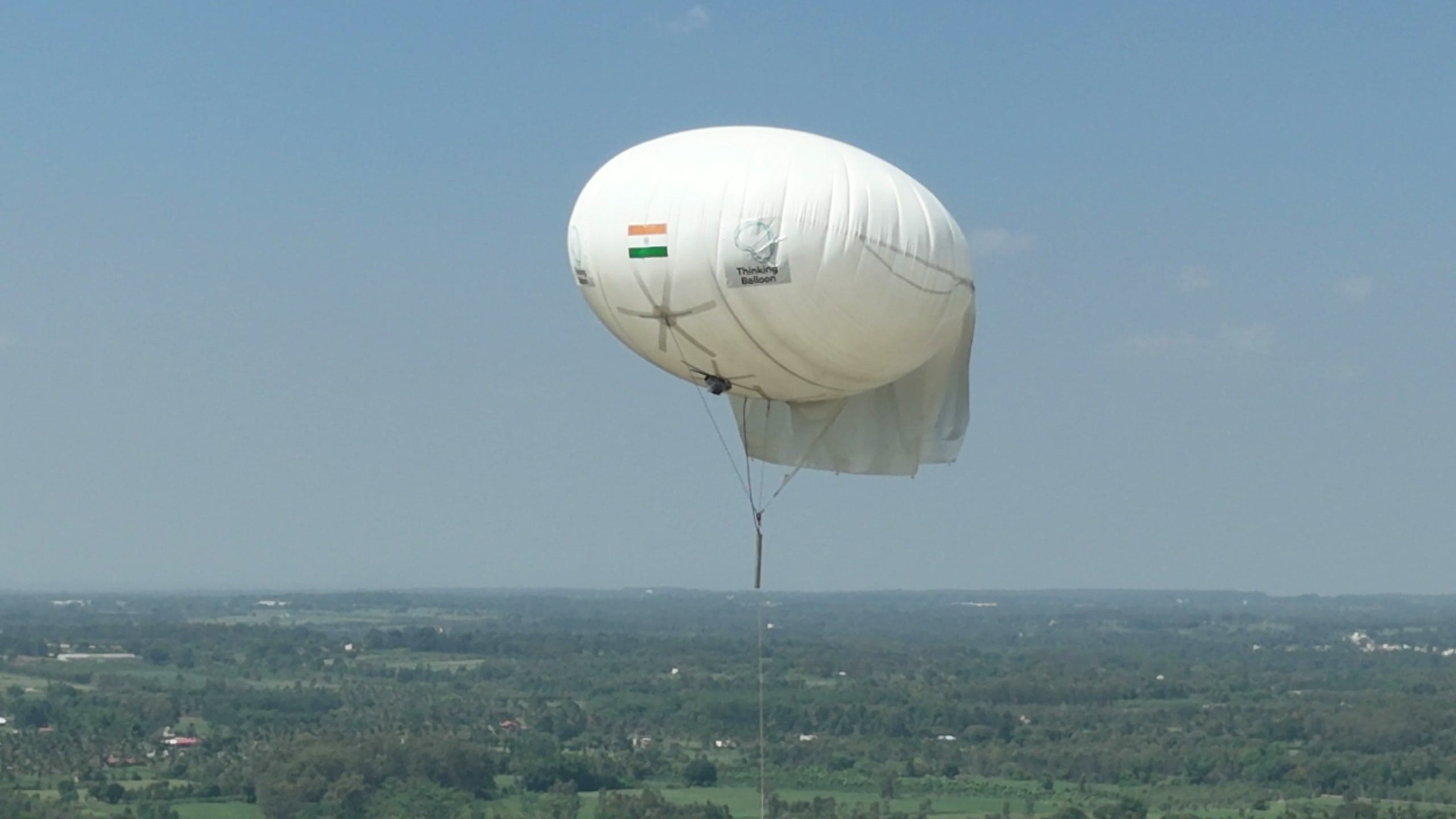
Holds a payload one to five kilometres up, with no engines.
An oblate envelope on a tether, with a sail that keeps it pointed into the wind.
On the ground
The station handles it. The software runs many as one.
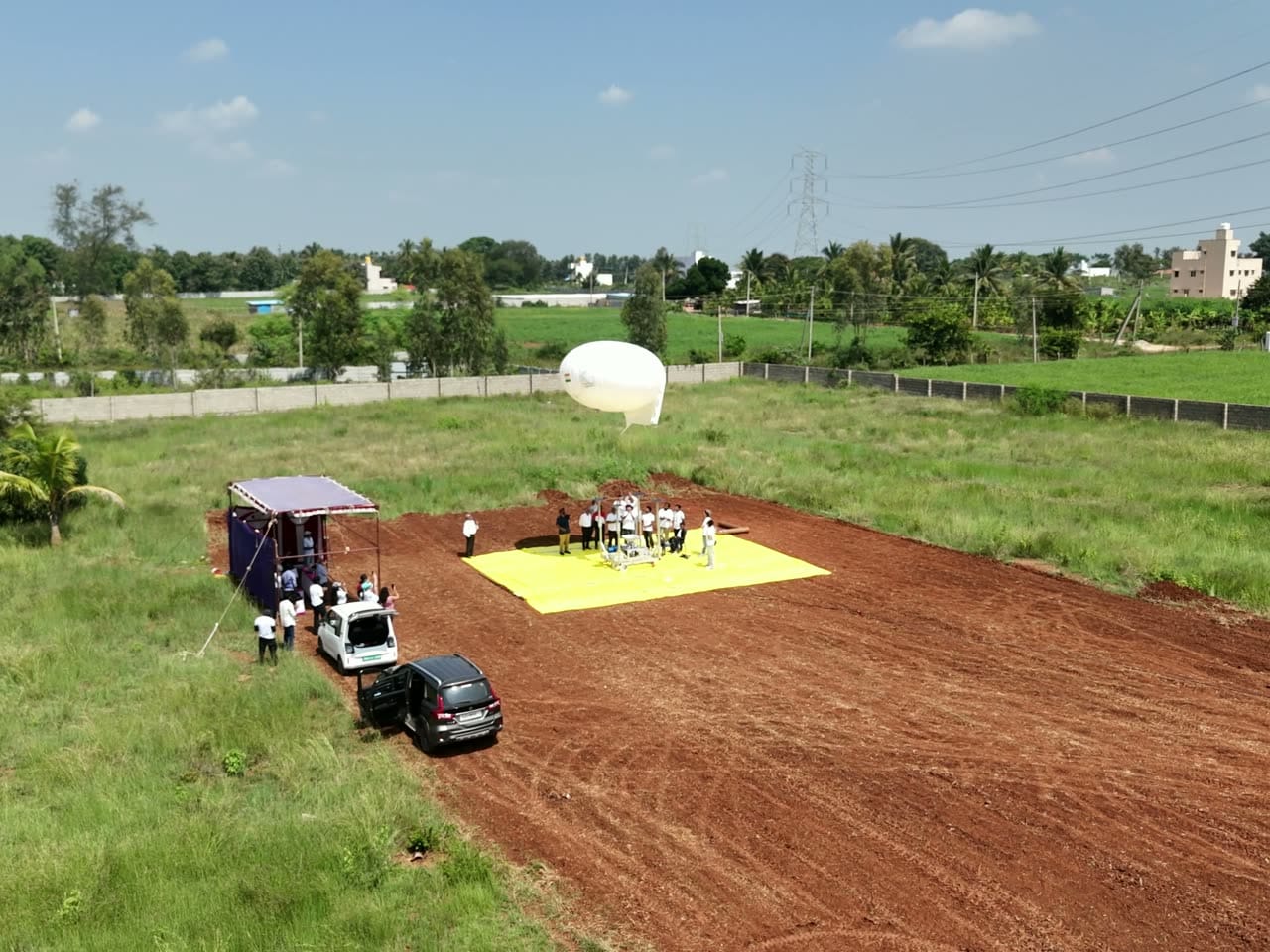
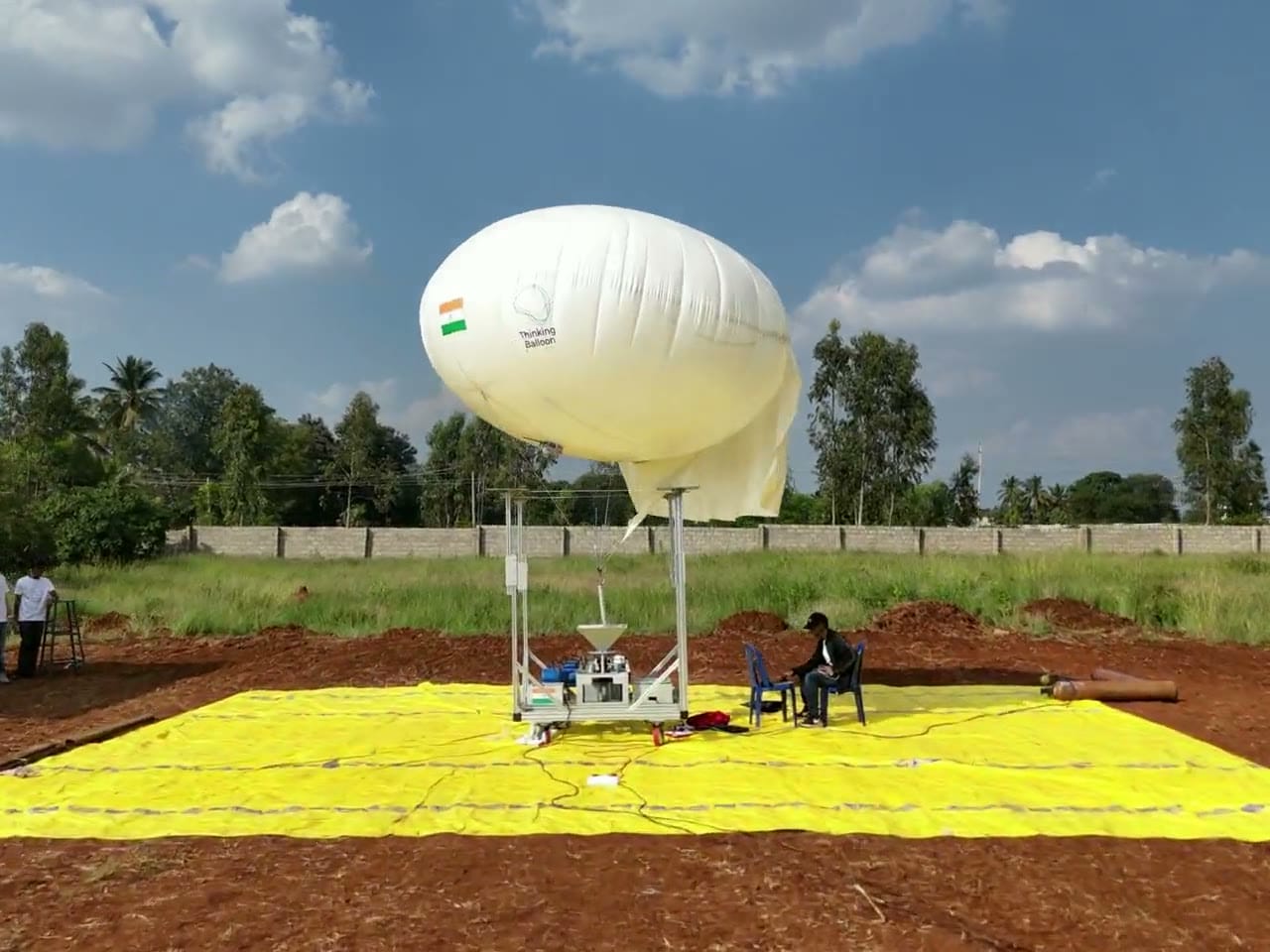
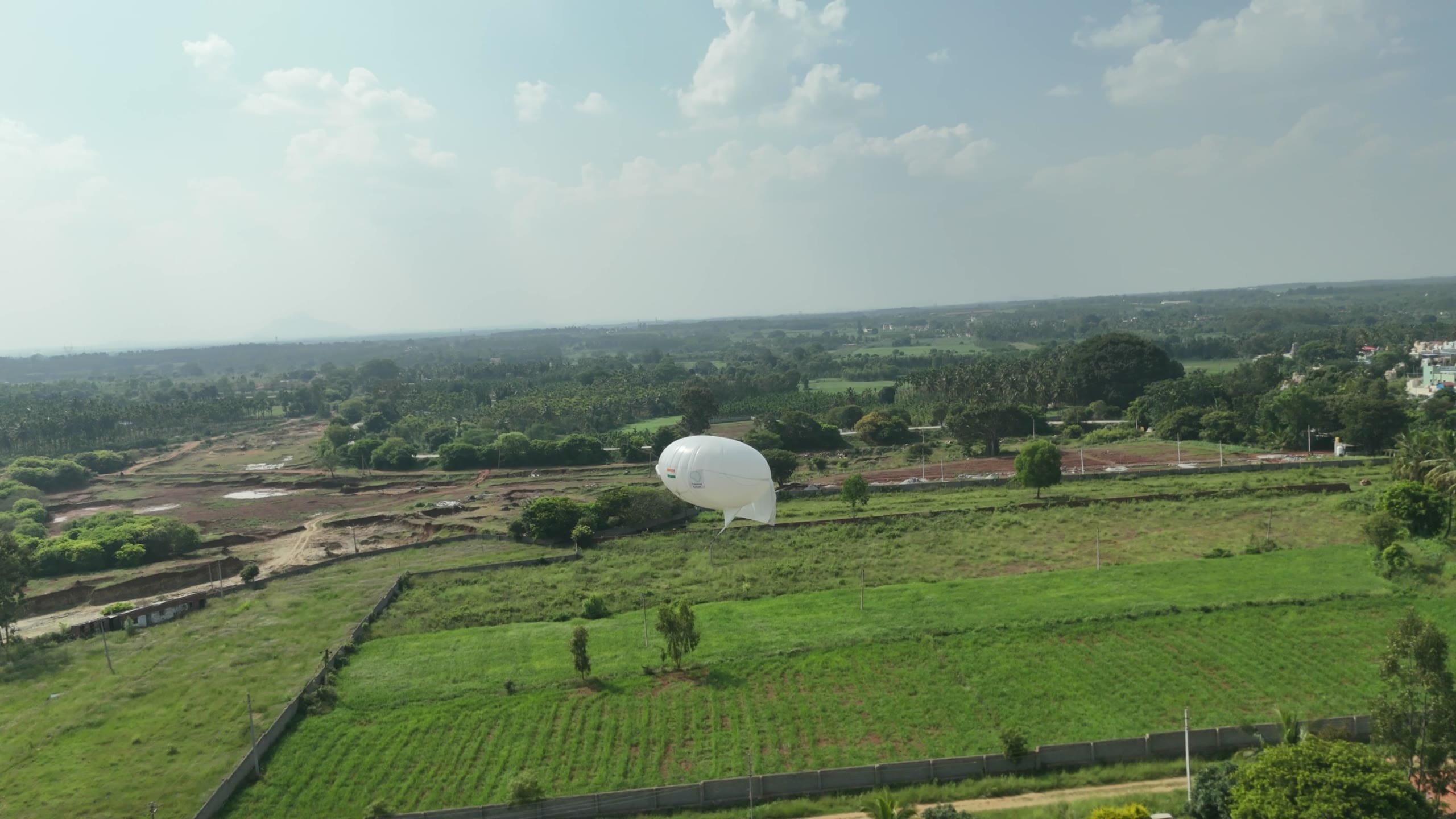 Field test, Bengaluru
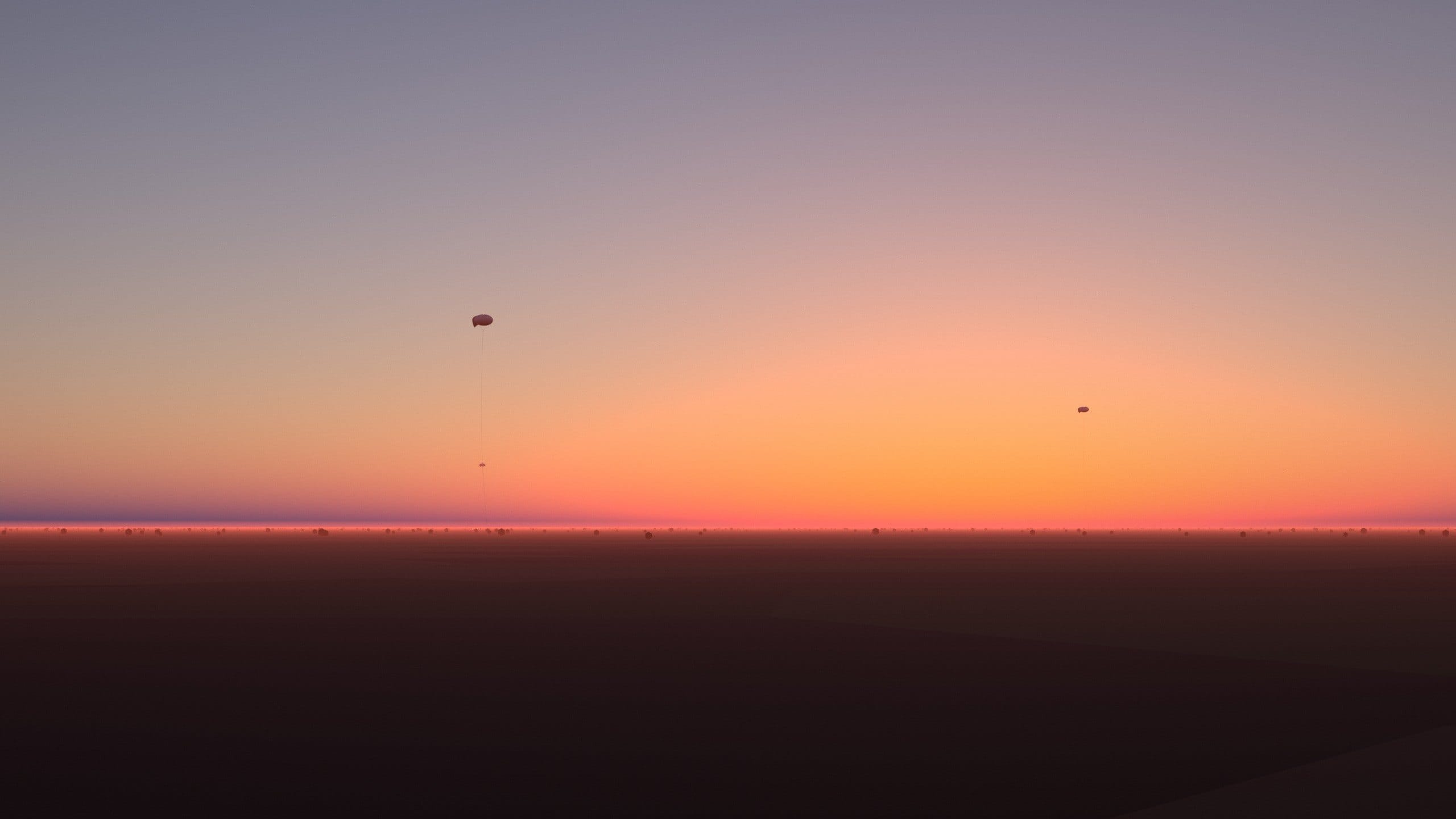
Ground station
04Launches, recovers, docks and services the aerostat.
Designed to fail secure: if power is lost, it holds on.
 Illustration
Fleet software
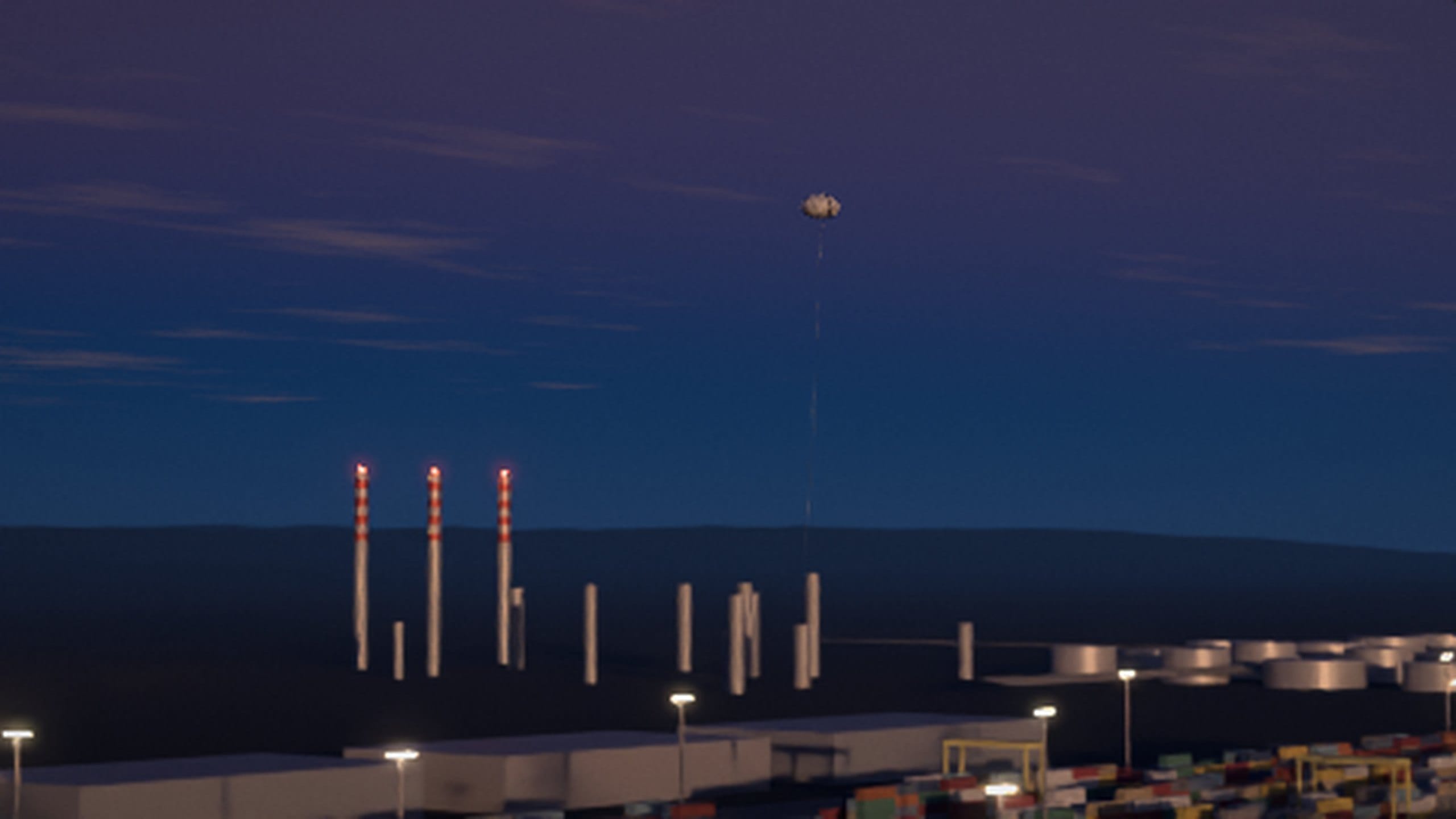
05Runs many aerostats as one network.
Health, weather, scheduling, recording and links to your systems.
 Illustration
Ground layer
06Covers the site when weather grounds the fleet.
A storm grounds neighbouring aerostats together, so each site keeps ground sensors.
How it works
Launch. Hold. Work. Recover. Dock. Service. Repeat.
The station runs the whole loop, so nobody has to stand by to handle the aerostat.


01
Launch
The station releases the aerostat and pays out tether in steps.
02
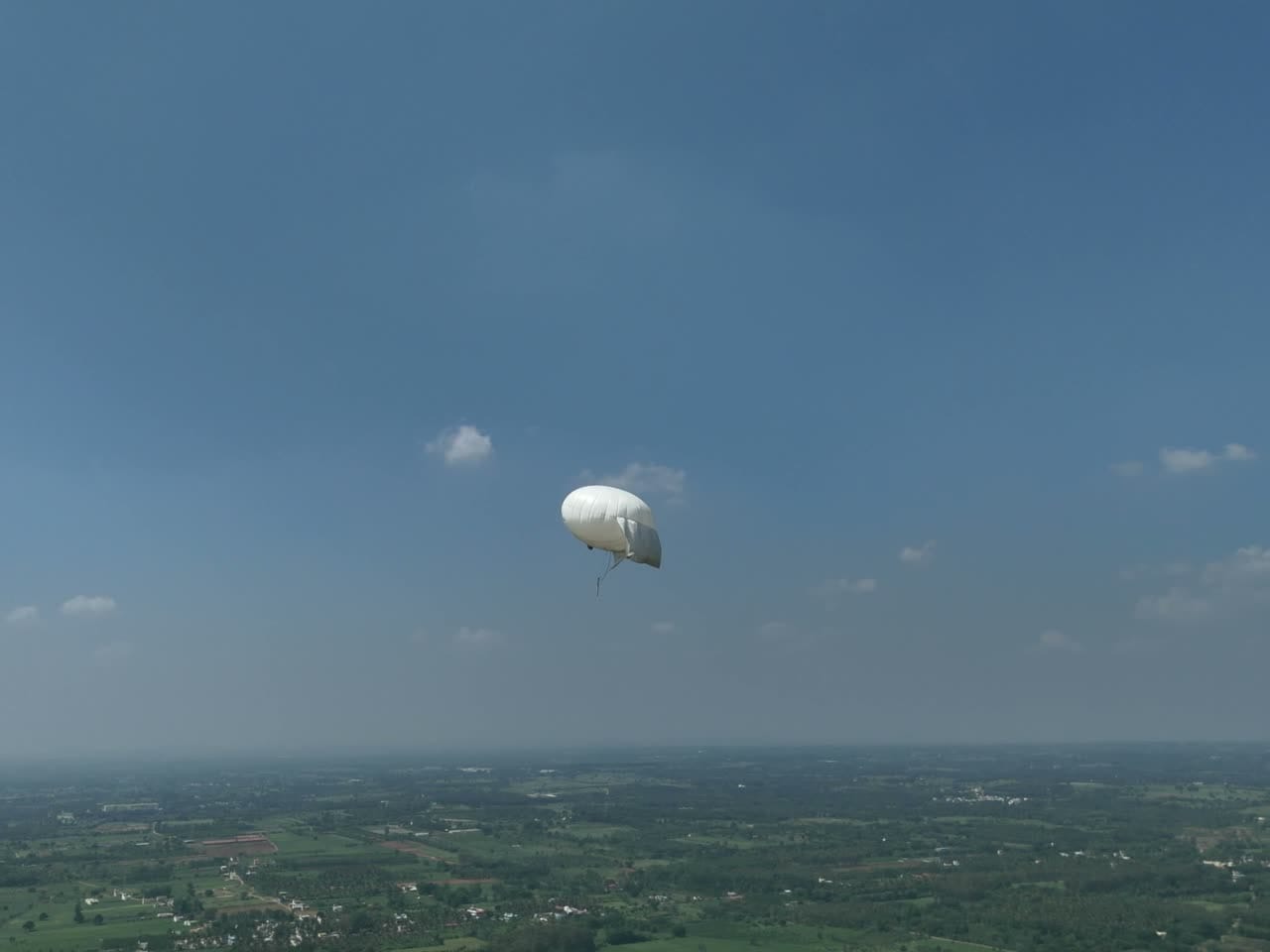
Hold
It holds height and points into the wind.
03
Work
The payload watches, listens, relays, keeps time or drops a test article.
04
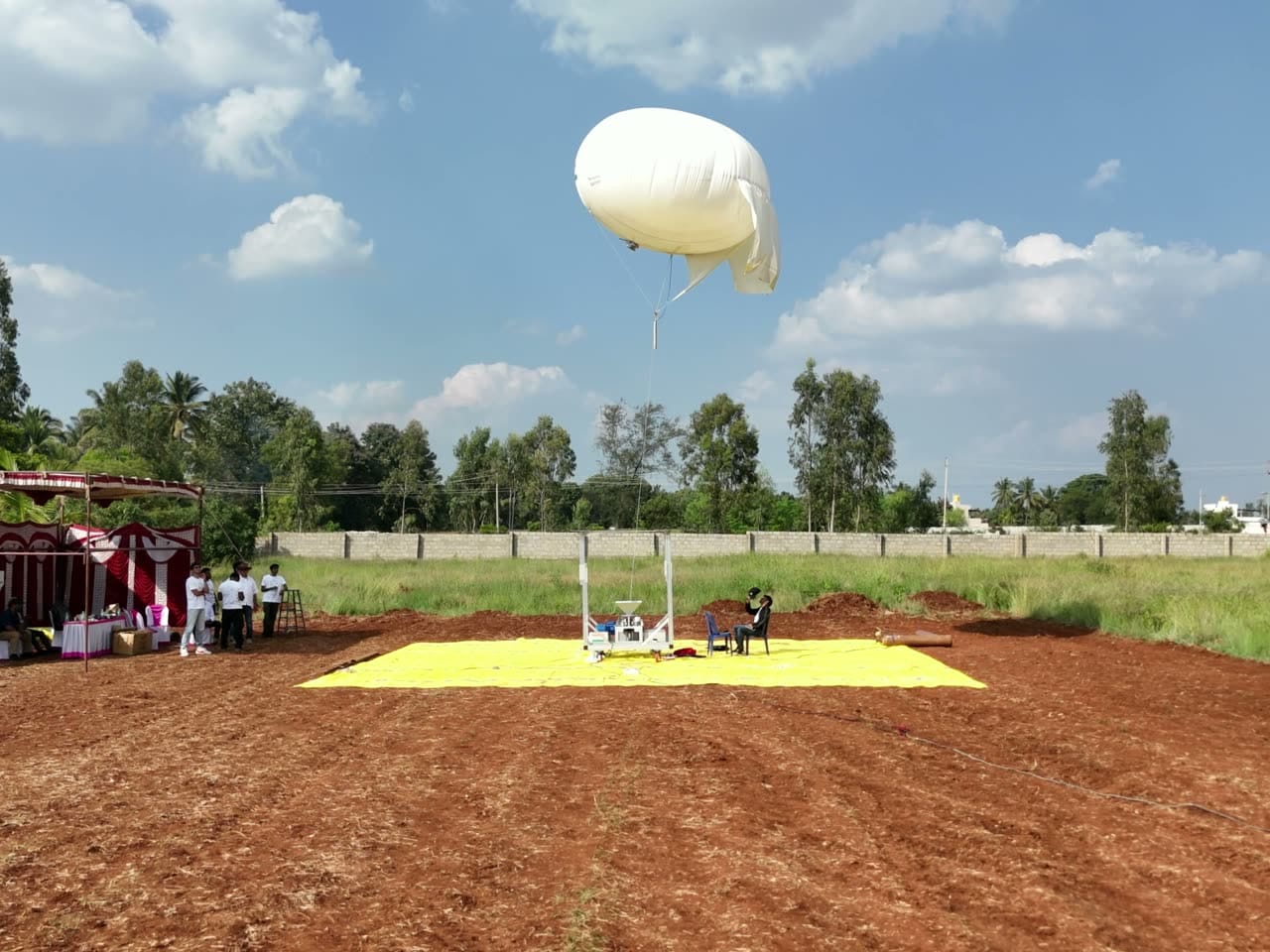
Recover
For weather, a refill or the end of a test, the winch brings it home.
05
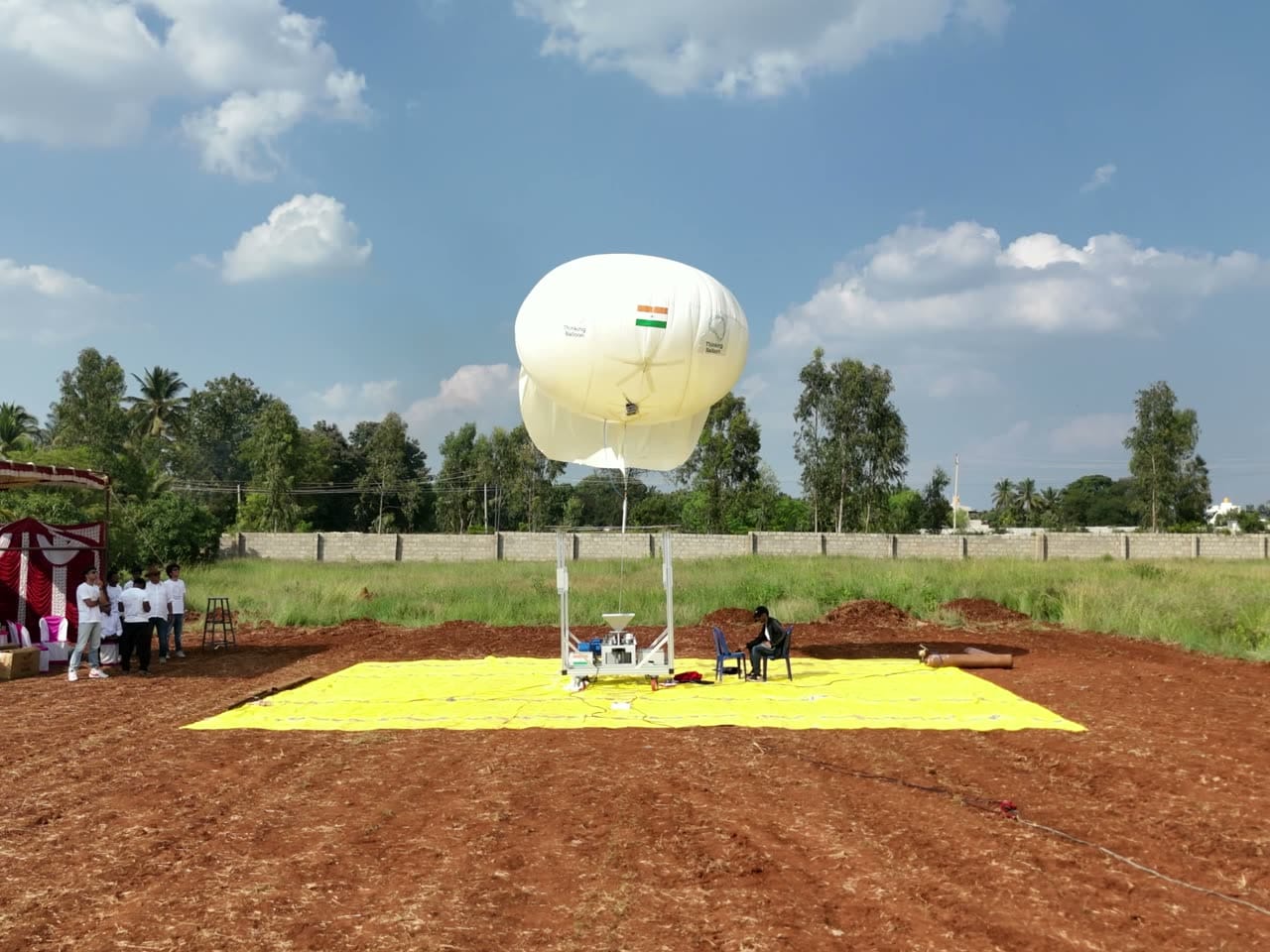
Dock
The station catches and secures it. No handling crew.
06
Service
Health checks and a gas top-up, ready for the next flight.
Over 100 autonomous launch-and-recovery cycles completed during demonstrator field testing in Bengaluru.
Two sizes
One for a fixed site, one on a trailer.
 Illustration
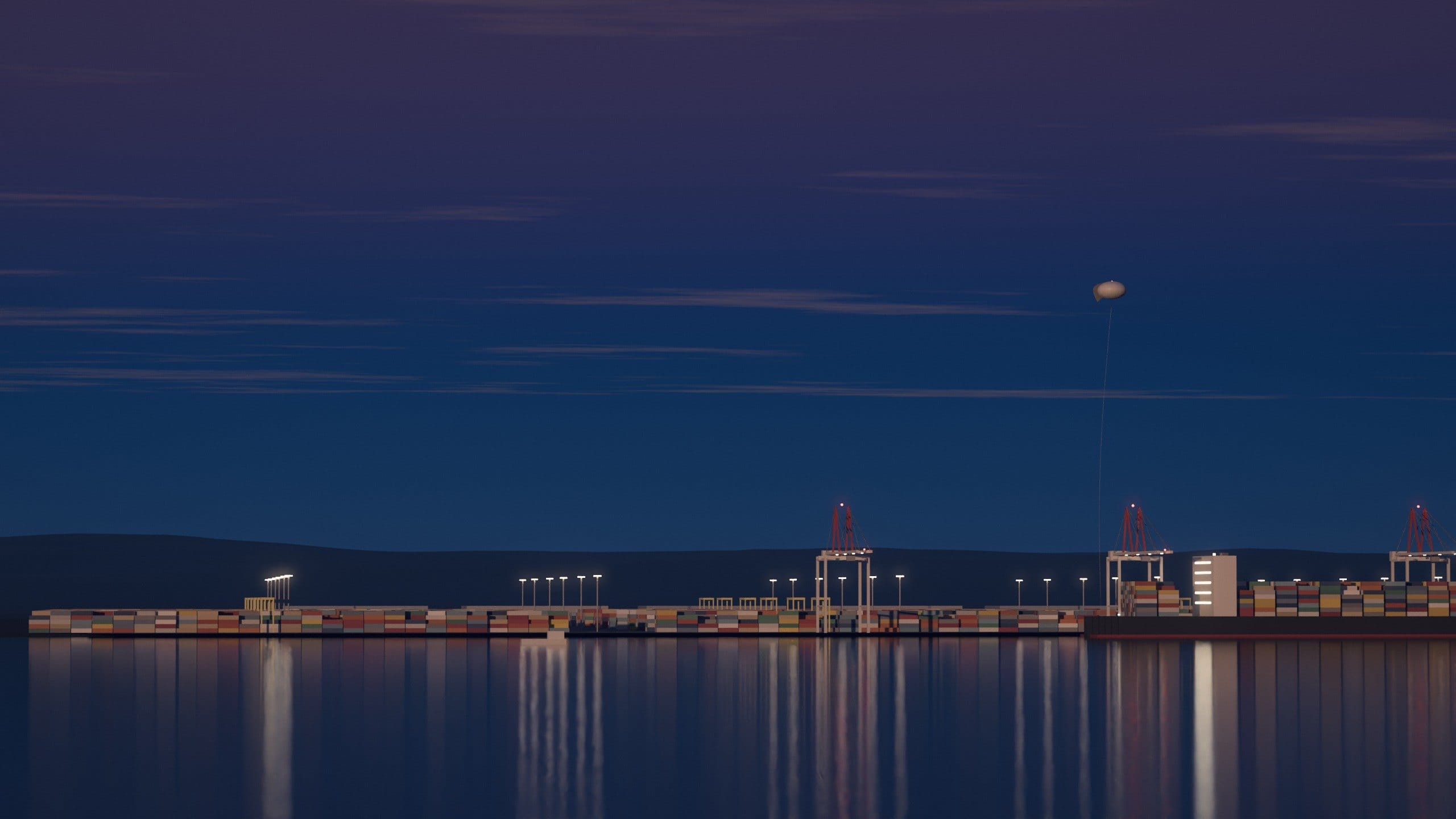
Fixed site
On a prepared pad. One to three kilometres for early warning, up to about five for drop tests.
 Illustration
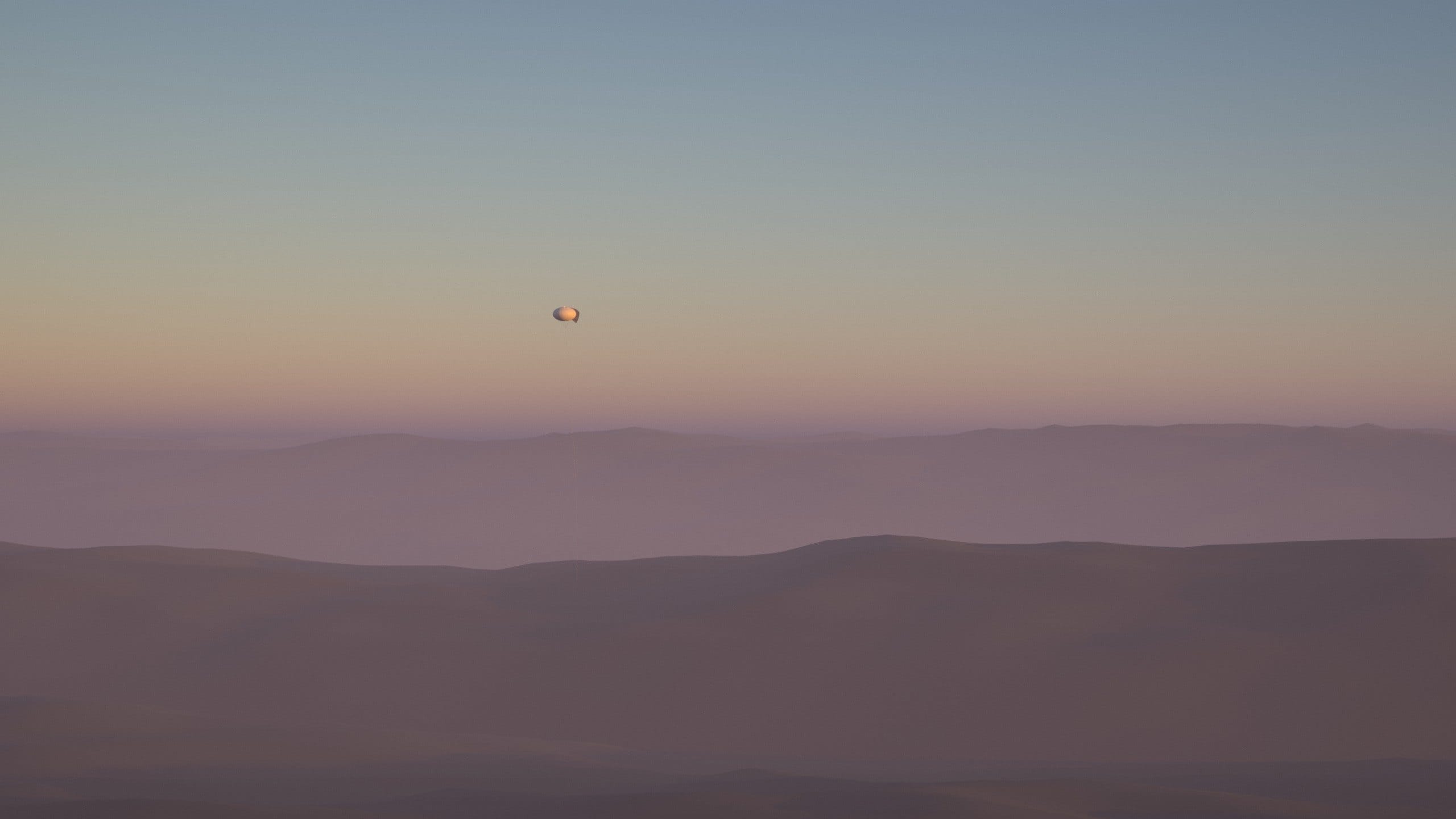
Trailer
Smaller, for events, summits, disaster zones and temporary bases.
One open payload interface.
Standard mounting, power, data, time and position. Partner and government payloads fit without changing the aerostat. We fly proven sensors from partners and handle the integration.
Safety
Built to fail secure.
When something goes wrong, the station holds the tether.
Choose a condition
An operator presses the emergency stop. The station stops winch motion and holds the tether.
Each condition leads to the same protective response.
- 01
The brake holds
It needs power to release, so losing power holds the tether.
- 02
Motion stops
A hardwired safety circuit stops winch motion without relying on software.
- 03
No automatic restart
An operator restarts the system, deliberately.
Design behaviour. Winch bench tests include braking on link loss.
We test in stages, and trust no limit until a test has proved it.

Designed for Indian weather.
Heat, monsoon, dust and sun are design inputs. Every flight logs wind, temperature and pressure, and our weather limits will come from that record.
Demonstrator flight test, Bengaluru
Results, as we measure them.
We publish each stage's results, with the conditions, on our blog.