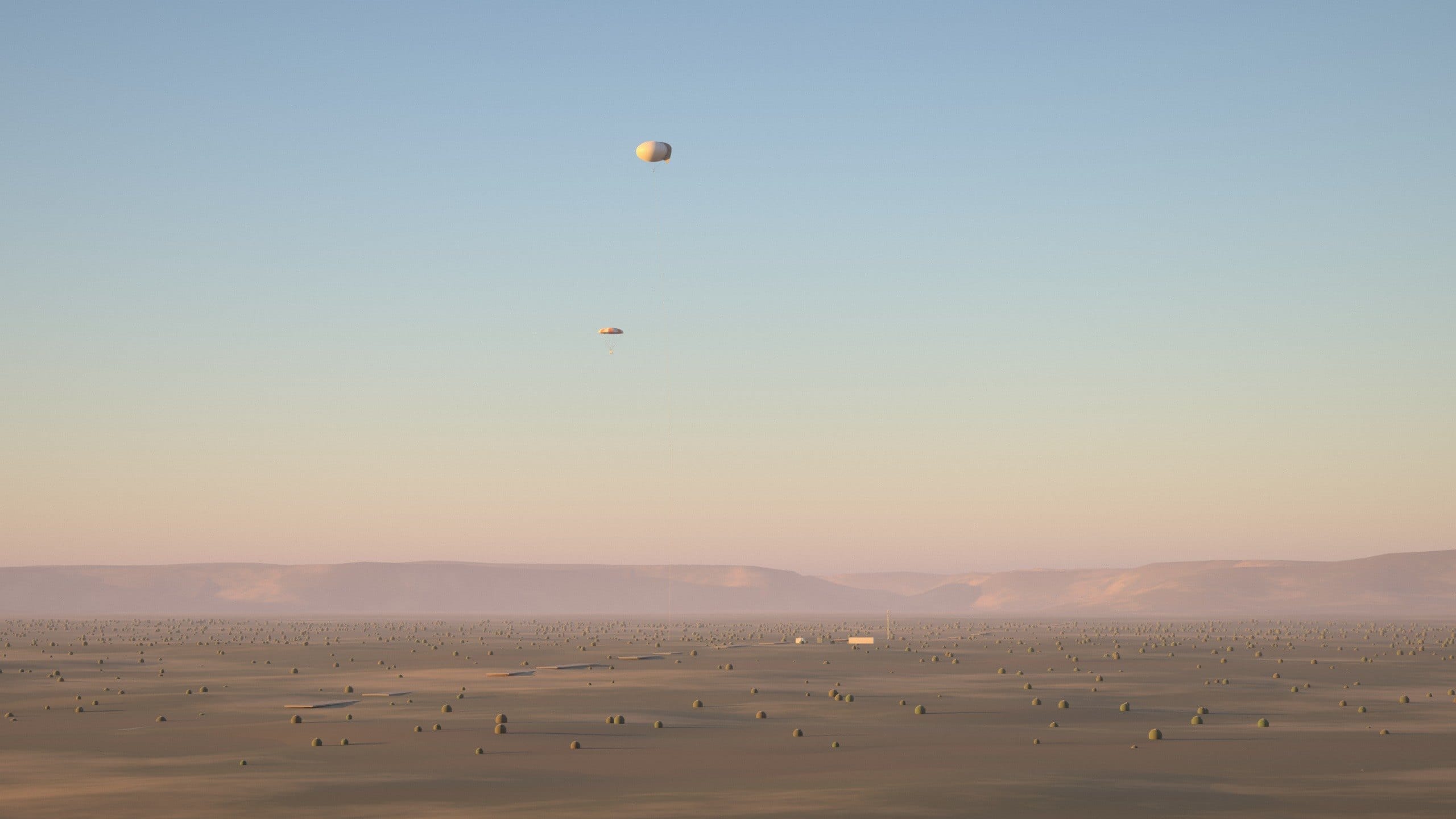
Illustration
A repeatable release point, without booking a helicopter.
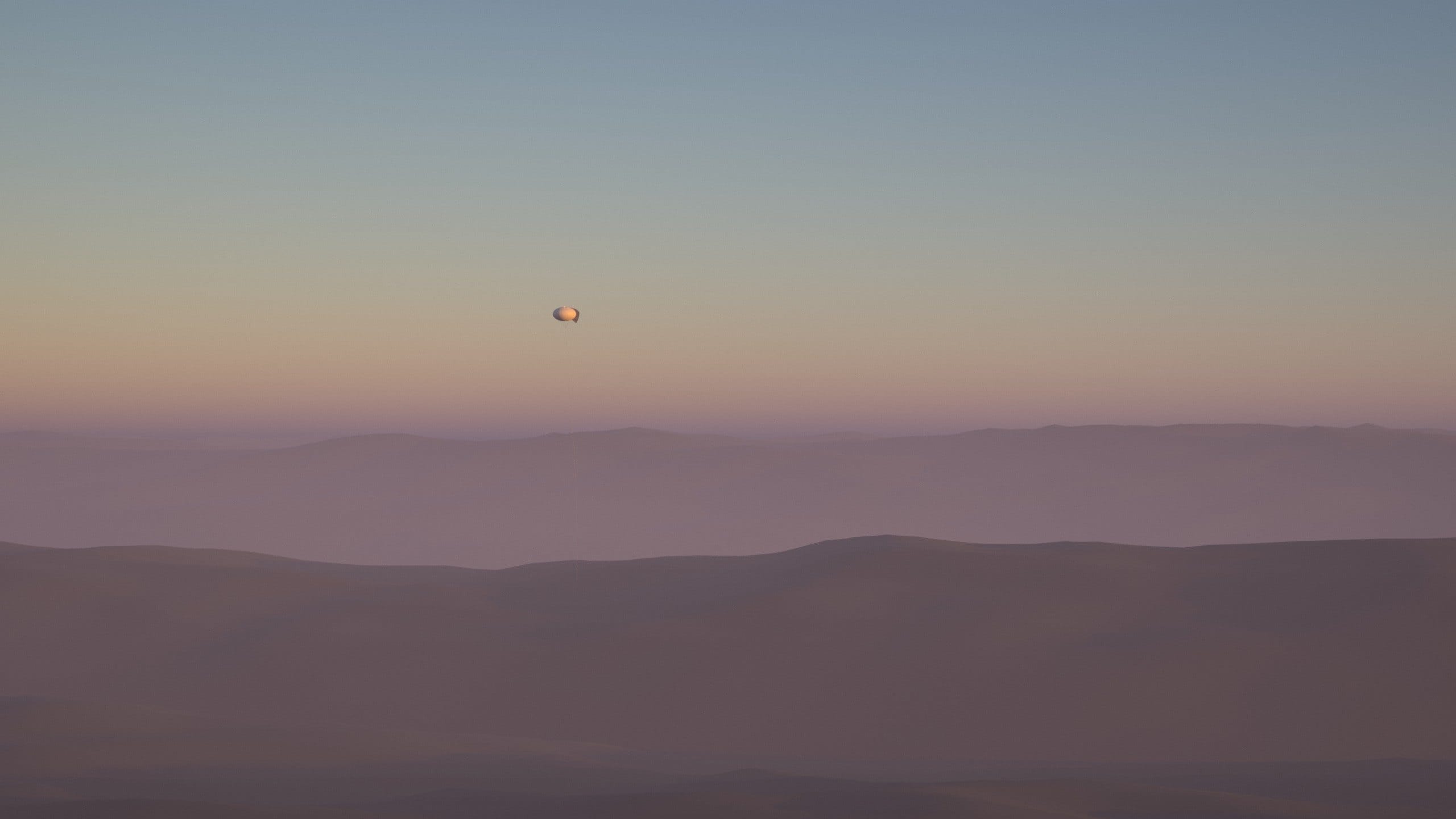
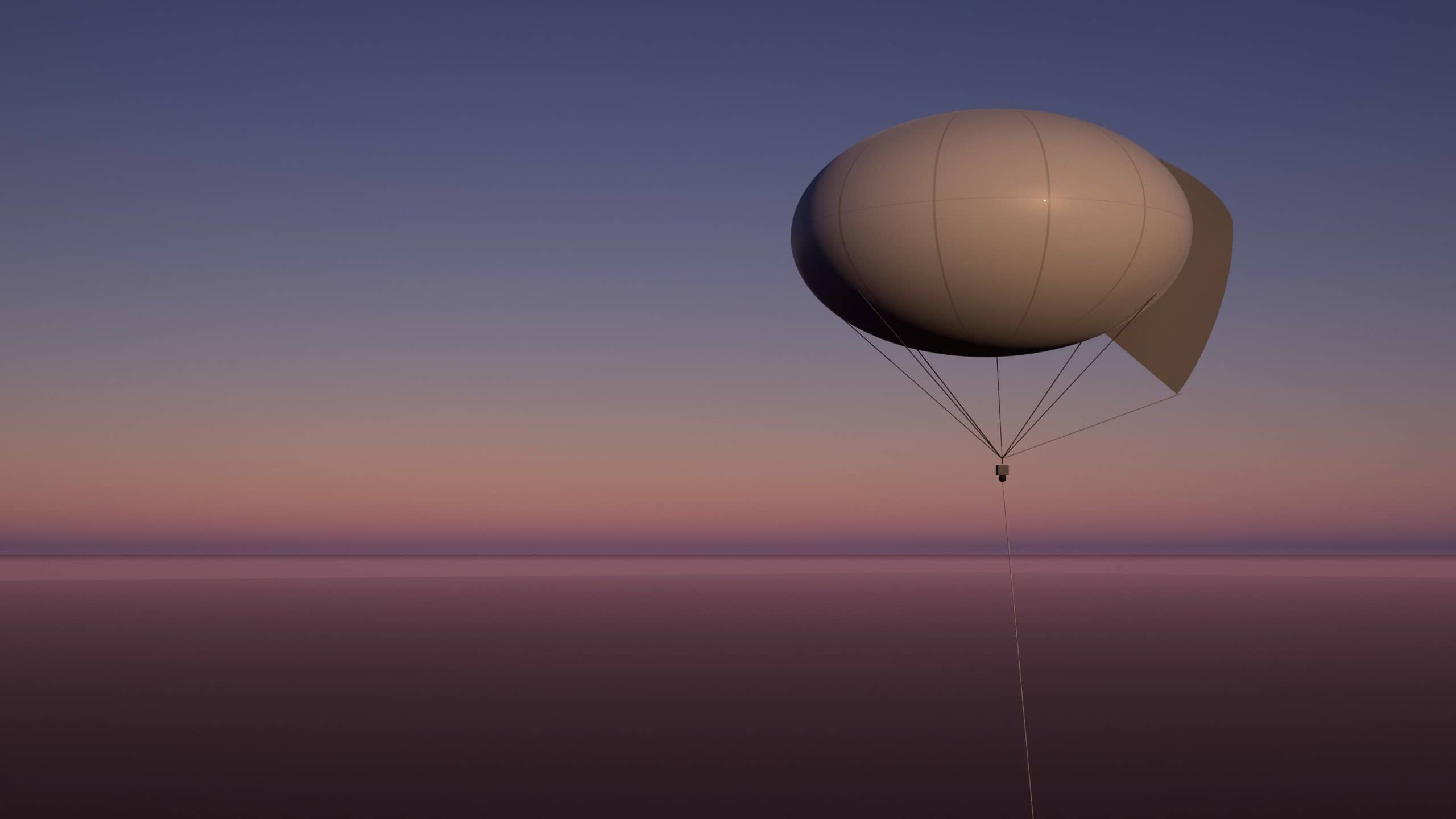
Drop tests, counter-drone evaluation and telemetry relay from altitude. The station launches and recovers the aerostat as often as you need.
How it works
A drop from a few kilometres usually means a helicopter and weeks of planning, every time. The range runs one loop instead: climb, release or observe, recover, reset, repeat. Every test leaves a full record: release state, weather, trajectory, video and telemetry.
Carries
- Drop tests
- C-UAS test and evaluation
- Telemetry relay
- Full test record
Where it stands
Opening in stages. Working with design partners now. Altitude rises one approval at a time.
What it does
- 01
Drop tests
Capsules, parachutes and airdrop payloads, from a few hundred metres up toward 5 km.
- 02
Counter-drone evaluation
A truth track from above shows what really happened, next to what your system saw.
- 03
Telemetry relay
Keeps flight-test data flowing where ground antennas cannot reach.
Limits
What it cannot do, so a site knows what to plan around.
- Each altitude opens only after its approvals.
- Target-drone release comes later, after its own safety review.
Good design partners have
What we will measure and show first.
- A test they need to repeat
- Clear success criteria
- Hardware ready to fly
Questions
Can I book a drop test now?
We are working with design partners first. Tell us about your test and we will tell you which stage can serve it.
How high will drop tests go?
The platform is designed for releases up to about 5 km. Tests start lower and step up as each altitude is approved.
Where is the range?
In India, in airspace approved for testing. We build in Bengaluru.


Have a test you need to repeat?
Tell us about the site or the test. We will tell you what we can do, and when.