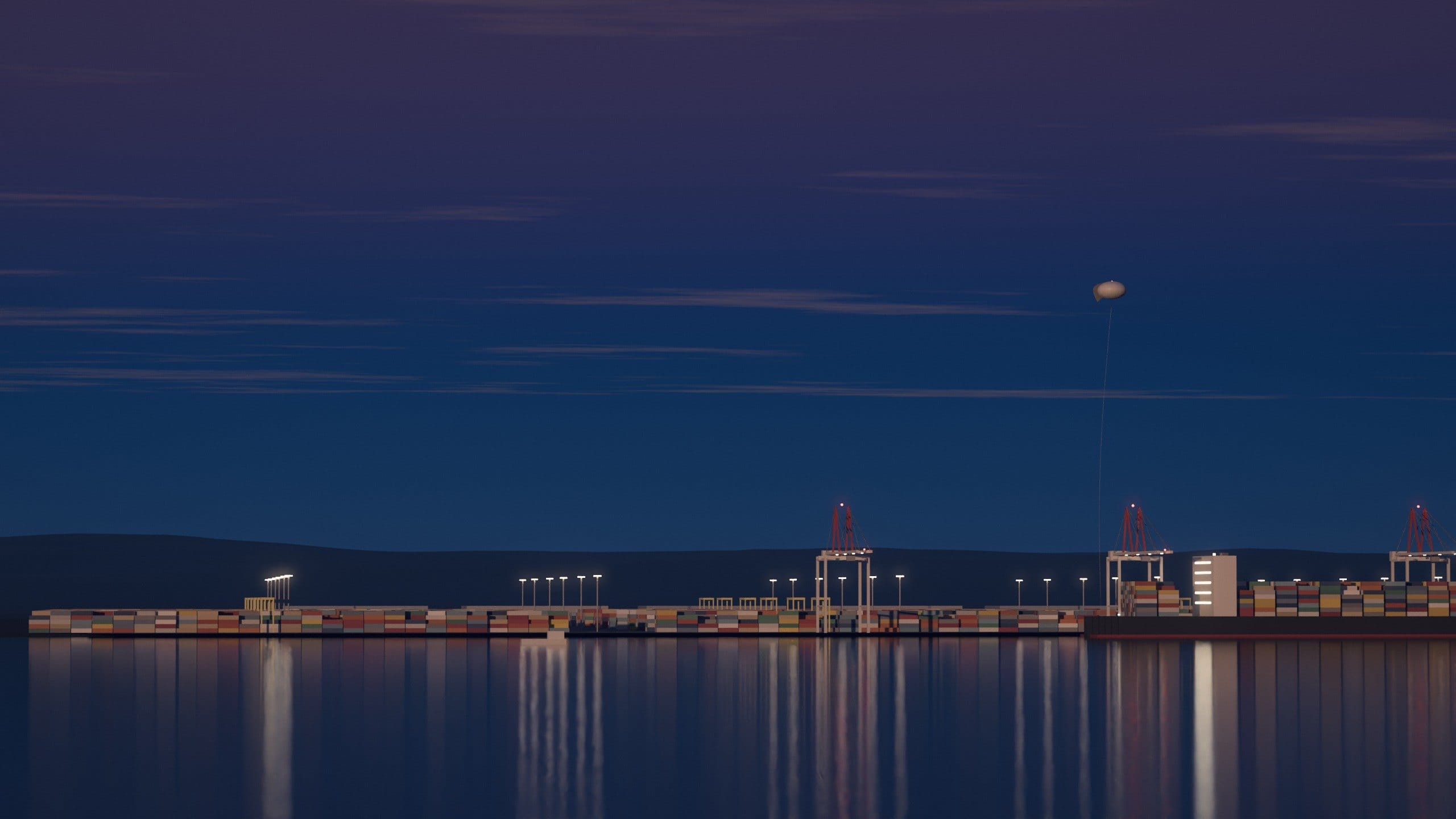
Illustration
Seeing over the stacks
Why ports and industrial sites are among the first places we will fly, and the simple geometry of what a camera 300 m up sees that one on a mast cannot.
Saurabh Chalke, Co-founder and CTO
2 min read
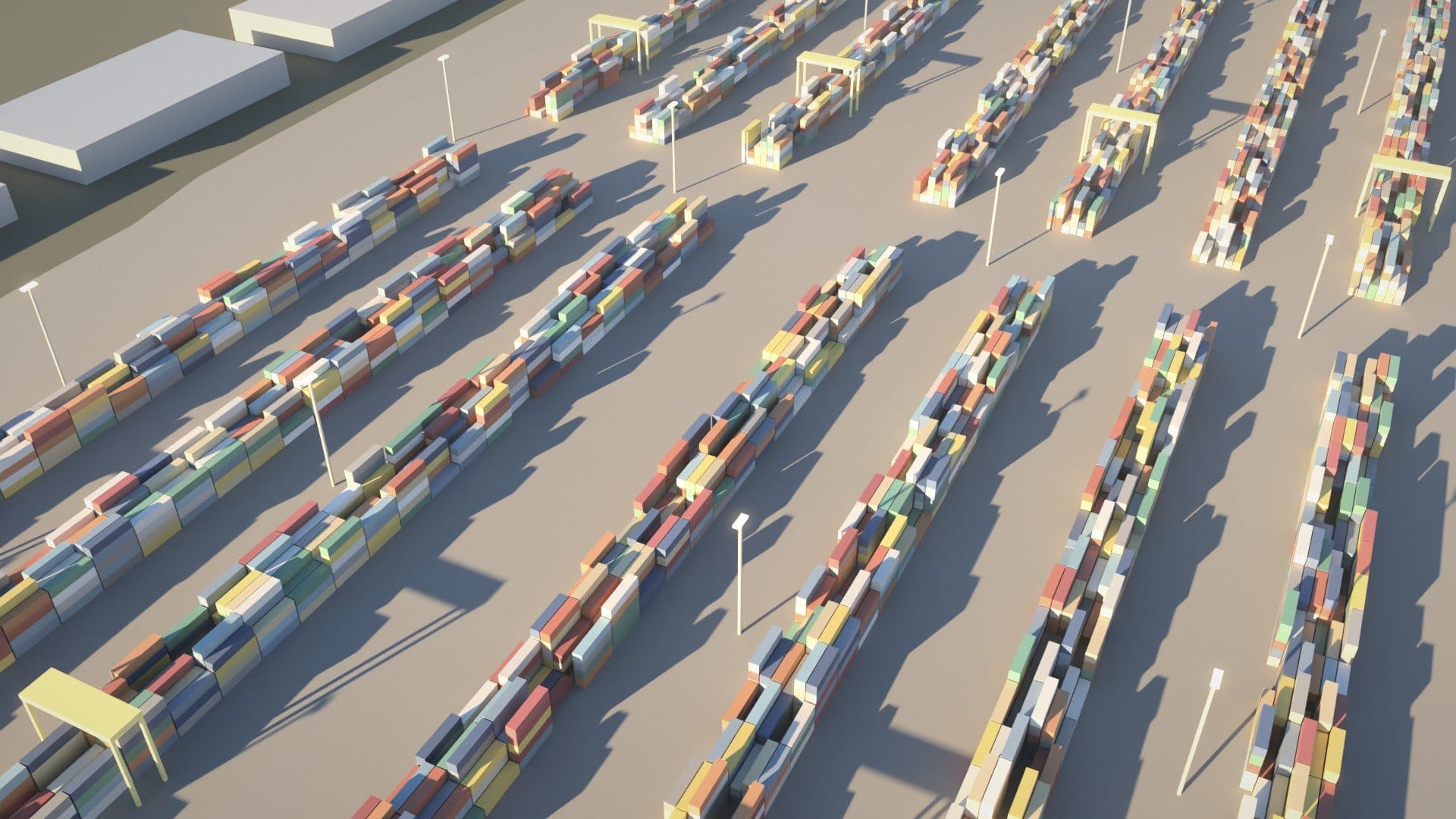
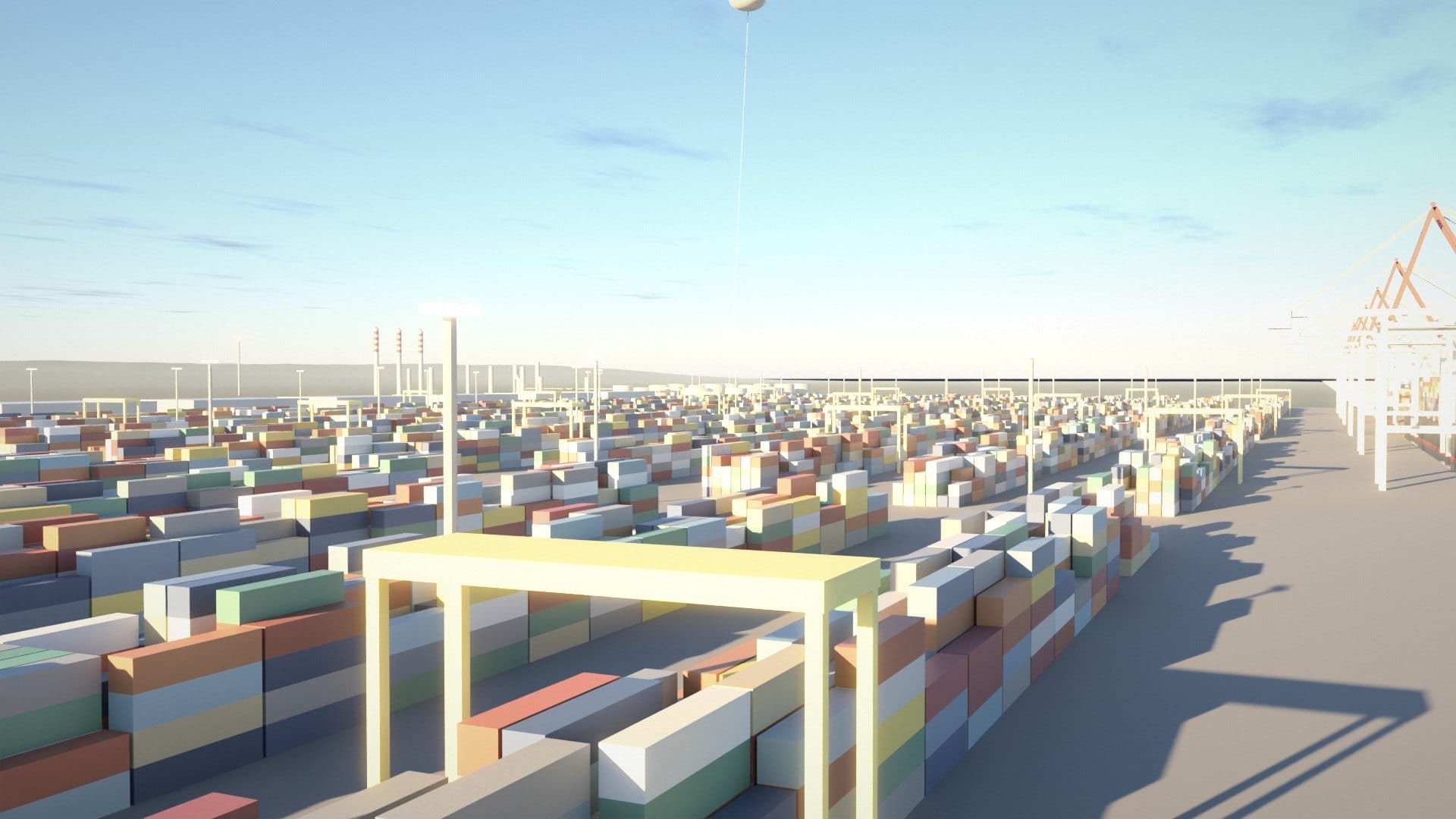
The same container yard from a 30 m mast and from the aerostat. Drag to compare. Illustration.
A port is a hard place to watch. Containers stand five high, cranes stand in rows, and the fence runs for kilometres, half of it along the water. Plants are the same, with tanks and pipe racks in place of boxes. Most sites add more cameras on more poles, and still have corners nobody sees.
The geometry
A camera sees the ground only where it has a straight line to it. Behind every stack is a strip it cannot see, and the length of that strip depends on how high the camera is.
For a stack 13 m tall, five containers high, standing 200 m from the camera:
| Camera | Height | Ground hidden behind the stack |
|---|---|---|
| Light pole | 15 m | about 1.3 km |
| Mast | 30 m | about 150 m |
| Aerostat | 150 m | about 19 m |
| Aerostat | 300 m | about 9 m |
The rule behind the table is short. The hidden strip is the stack's height times its distance, divided by how much higher the camera is than the stack. Double that difference and the blind strip halves. Go ten times higher and it nearly disappears.
Why it is a good first job
It needs little height. A few hundred metres is enough, which is where our small autonomous aerostat is designed to work. It needs cameras rather than radar, and good day and night cameras are easy to buy. And sites already know what they want to see: the fence, the gates, the berths, smoke and fire, and now drones.
What we will measure
A pilot is only useful if it is measured. On each one we will record:
- How much of the site the camera actually sees, checked against a site map
- Hours of coverage, and how much the weather took away
- What the site's own teams spotted first from above
We will publish the results here. If you run a port or a plant and want to be one of the first sites, write to us.
Build the next mission with us.
Sites, test teams, payload makers, investors and engineers. The founders read every message.